Dining in Austria: A Blend of Tradition and Innovation
When it comes to Austrian cuisine, today’s generation of chefs are blending the country’s rich culinary traditions with new innovations. They are reconnecting with the land, focusing on local ingredients and the seasons, creating exceptional dishes.
My husband and I travel to Europe often and have visited many of Austria’s charming cities and alpine regions. In recent years, we noticed a new generation of chefs in Austria are focusing on regional ingredients. They are using inventive techniques and embracing sustainability.
To understand Austrian cuisine, you need to know about the land itself. The Alps cover 60% of Austria, resulting in long winters and a short growing season. The limited agricultural area has meant that people have relied on food that’s seasonal and can be preserved.
“About a quarter of Austria’s agricultural land is certified as organic. This makes Austria a leader in organic farming in Europe.” Federal Ministry of Agriculture
Alpine Foods
The simplicity of food in the alpine regions of Austria was due to the harsh environment and the isolation of its farming communities. People were forced to be self-reliant and use ingredients they could produce or find locally. This self-reliance shaped distinct regional variations in their cuisine.
The alpine climate restricted the growth of many crops. People relied on hardy root vegetables, wild herbs, and mushrooms. Hunters brought back a wide variety of game like deer, wild boar, rabbit, pheasant, and duck. To survive the long winters, families cured and smoked meat and sausage. .
These meats and sausages lasted for many months as did grains and root vegetables. Whatever ingredients that were available were used in stews. These one-pot meals were warming and filling, especially during colder months.
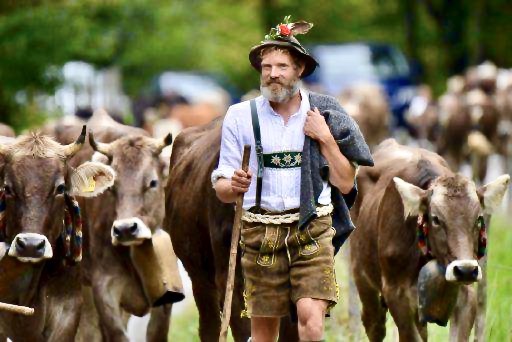
During the warmer months the abundant mountain pastures were ideal for cattle. Dairy products like milk, cheese, and butter became a major part of the alpine diet. Farmers needed high-energy meals for the physical labor necessary to farm the steep slopes. Hearty dishes of meats, cheese, and vegetables provided the energy
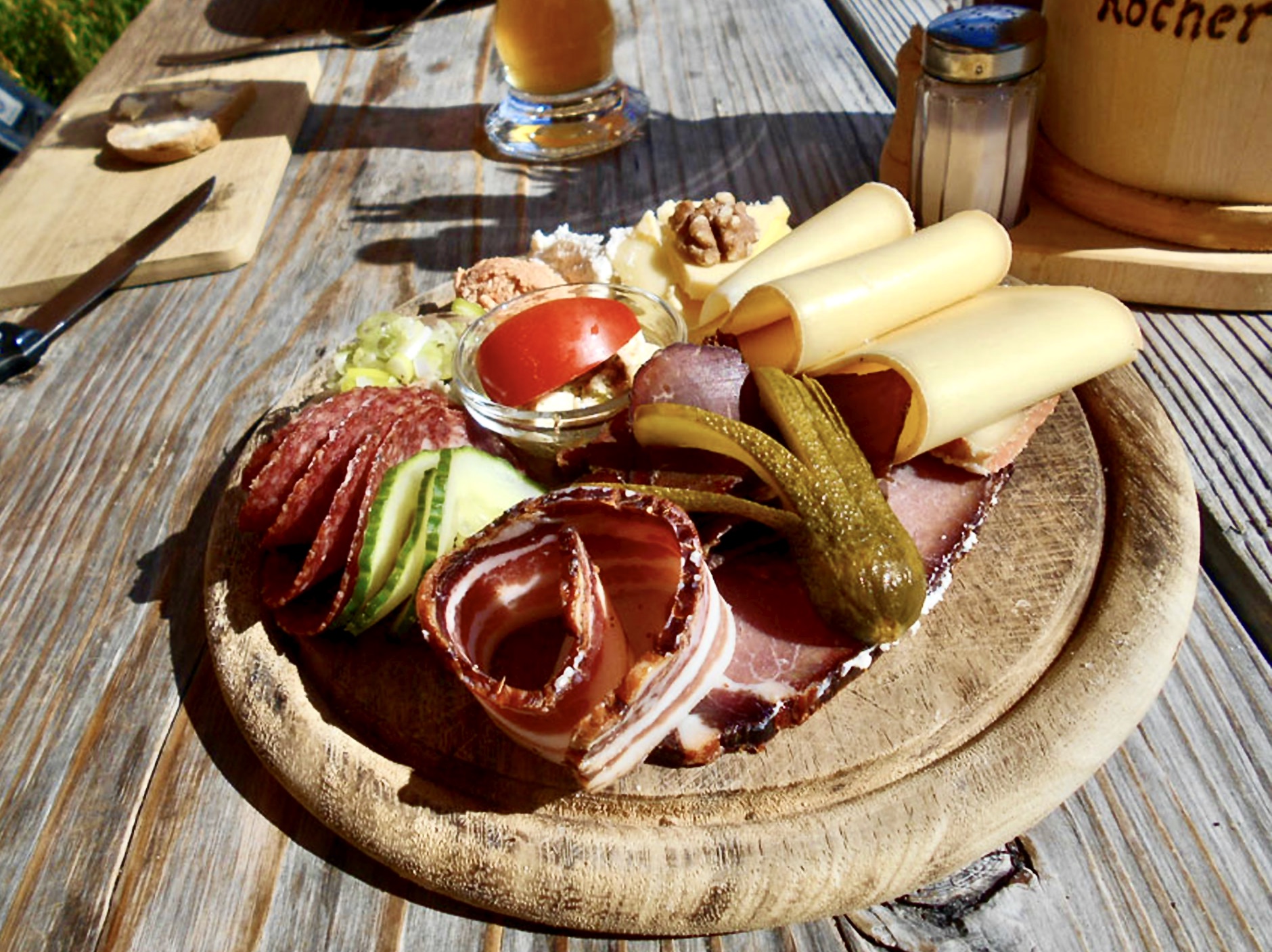
These simple ingredients formed the basis of many traditional dishes still enjoyed in Austria’s alpine regions today. A popular meal is Brettljause (farmer’s plate) that takes its name from the wooden board it’s served on. It is a traditional Austrian snack platter. It includes a variety of smoked meats, cheeses, eggs, vegetables and spreads, all served with a dark, hearty bread.
Hikers like to share a Brettljause when they stop for a break at mountain huts. The huts are known for serving products made right there or from local farms in the valley. This gives hikers a taste of authentic regional cuisine.
Historical Influences
Austrian cuisine has had a fascinating blend of historical influences. A vast array of cultures, languages, and culinary traditions came together during the Austro-Hungarian Empire’s reign in the 19th century. The food became more refined and featured an eclectic mix of cuisines from Europe.
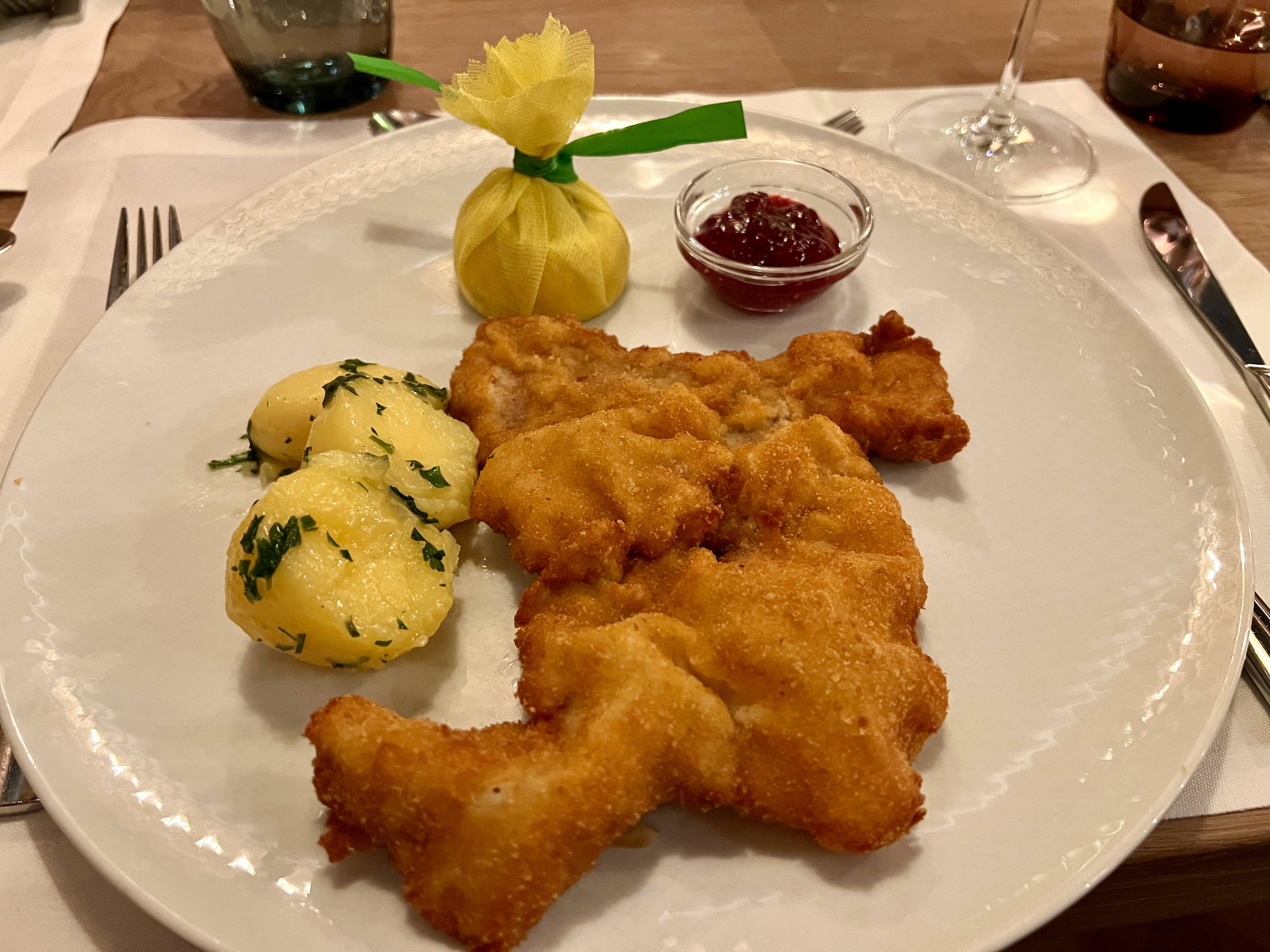
The Empire’s reign continued to feature popular dishes that included the generous use of meats, root vegetables and spices. There was also a variety of both savory and sweet dumplings. Wiener (Viennese) Schnitzel and Goulash were among the favorites.
Click on any photo to enlarge and see a slide show.
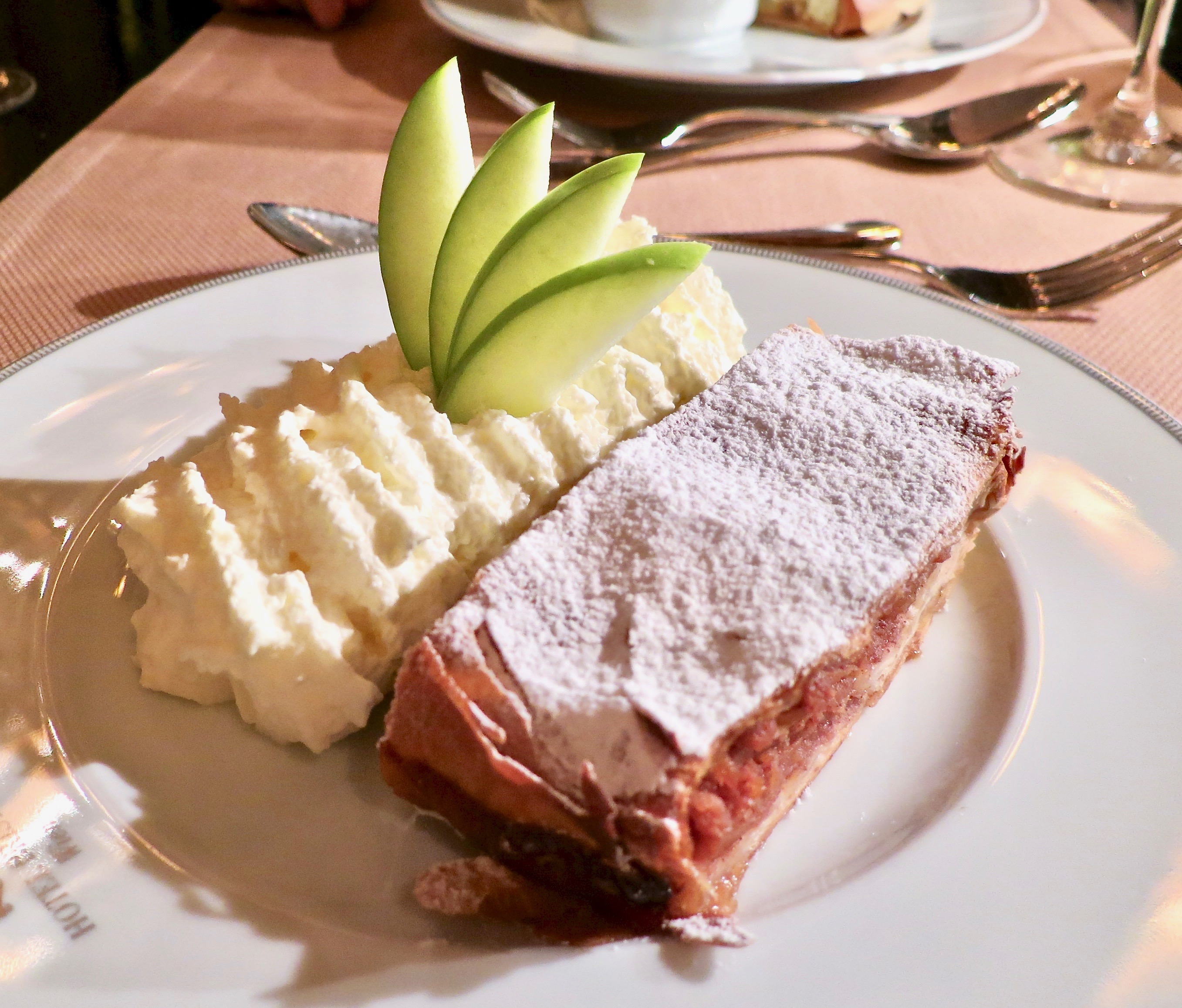
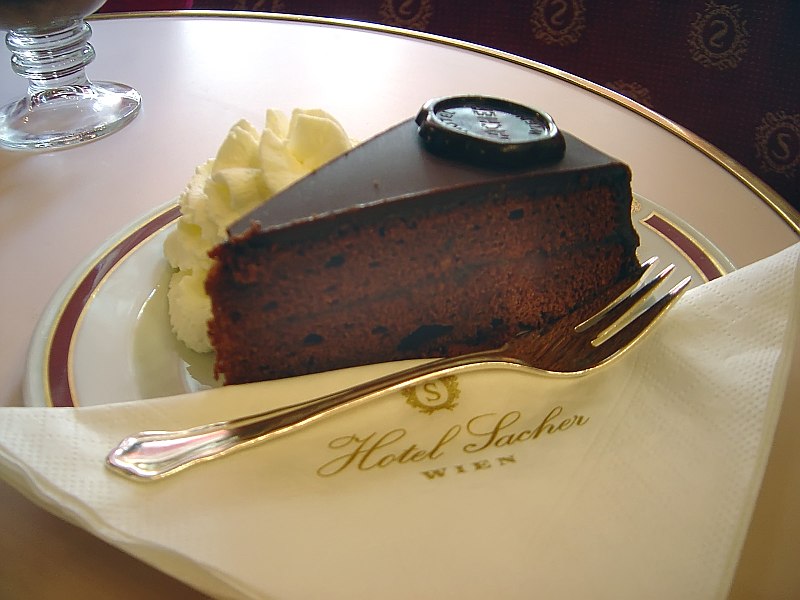
Vienna became internationally recognized for its outstanding pastries. Apfelstrudel (apple strudel) became part of the famous Viennese coffeehouse tradition. Sachertorte (chocolate cake with apricot jam) created at the famous Sacher hotel and Kaiserschmarrn (shredded pancakes) played a significant role too.
‘”Dining at a cafe is such an important part of the city’s culture that the Viennese coffee house culture is listed on UNESCO’s Intangible Cultural Heritage list.” Wikipedia
Today, these decadent and delicious desserts are popular across all of Austria. The hotel Salzburgerhof in Zell am See offers one of the best apple strudels we have ever had. It is available on the hotel’s afternoon cake and strudel buffet. Still warm from the oven, it is accompanied with a light vanilla custard sauce.
Innovations
A growing number of the chefs cooking in Austria have traveled and worked in kitchens around Europe and the world. Their experiences are reflected in the dishes they are creating.
“Our travels have significantly influenced our culinary approach, particularly our experiences at various food markets across Asia.”
Chef Obauer
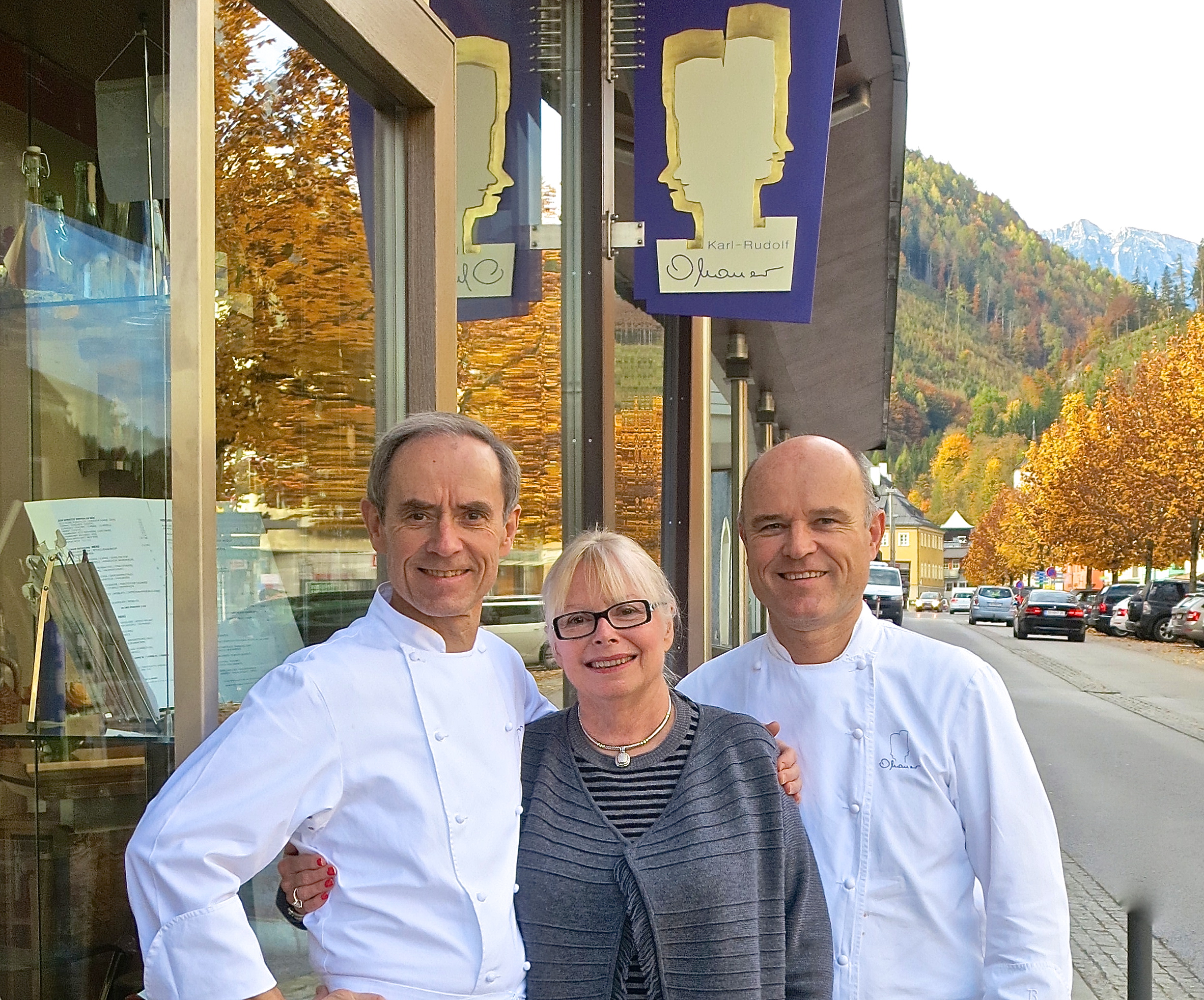
One of our favorite restaurants is Obauer, a two-starred contemporary alpine restaurant in Werfen. Rudi and Karl Obauer are the chef/owners. They serve classic dishes with modern influences.
Each dish is prepared using the finest ingredients from local farms and suppliers, ensuring the highest quality and freshness. You can often find a unique dish on one of their seasonal menus.
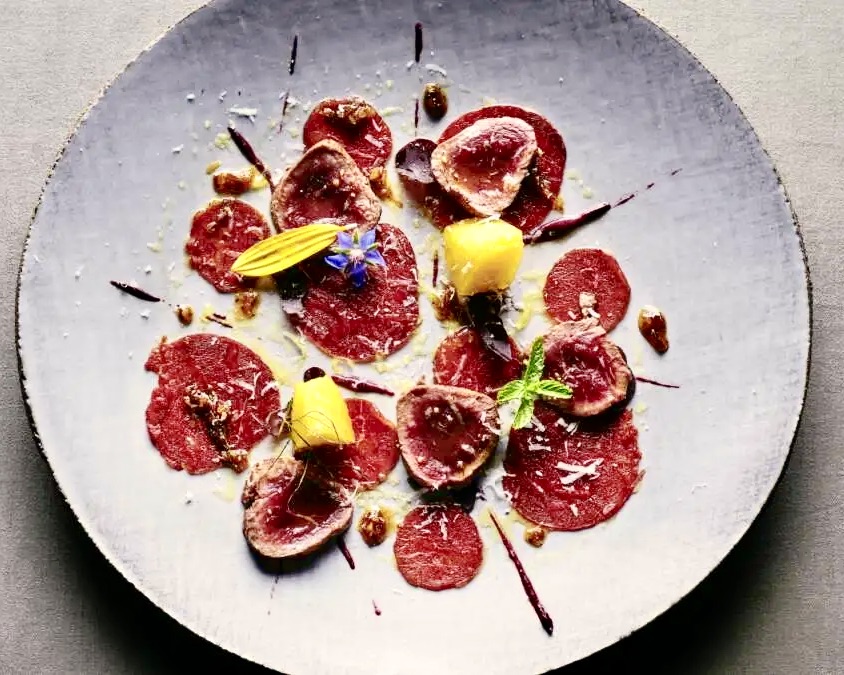
One item you might see is venison carpaccio with air-dried chamois and saffron apple. The chamois is a goat-antelope native to Austria’s mountainous regions.
Contemporary Techniques
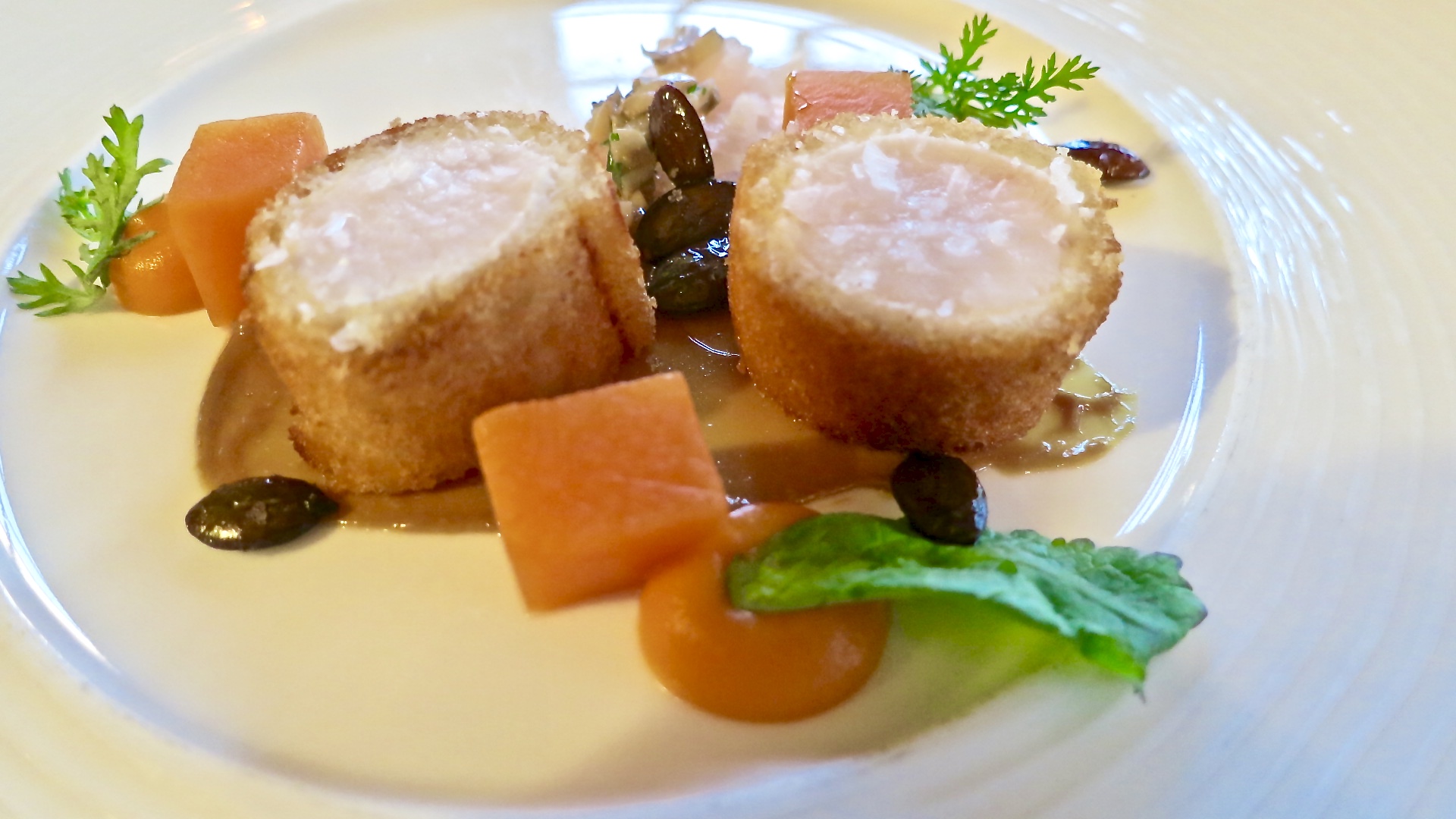
Austrian chefs are also using contemporary plating techniques that create beautifully presented meals. This results are unique dishes that offer a fresh perspective on traditional Austrian cuisine.
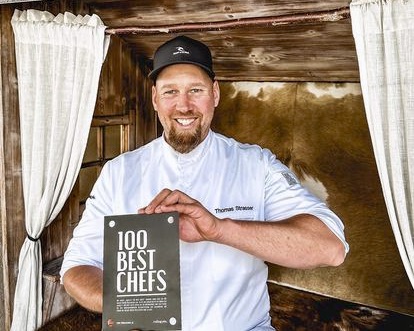
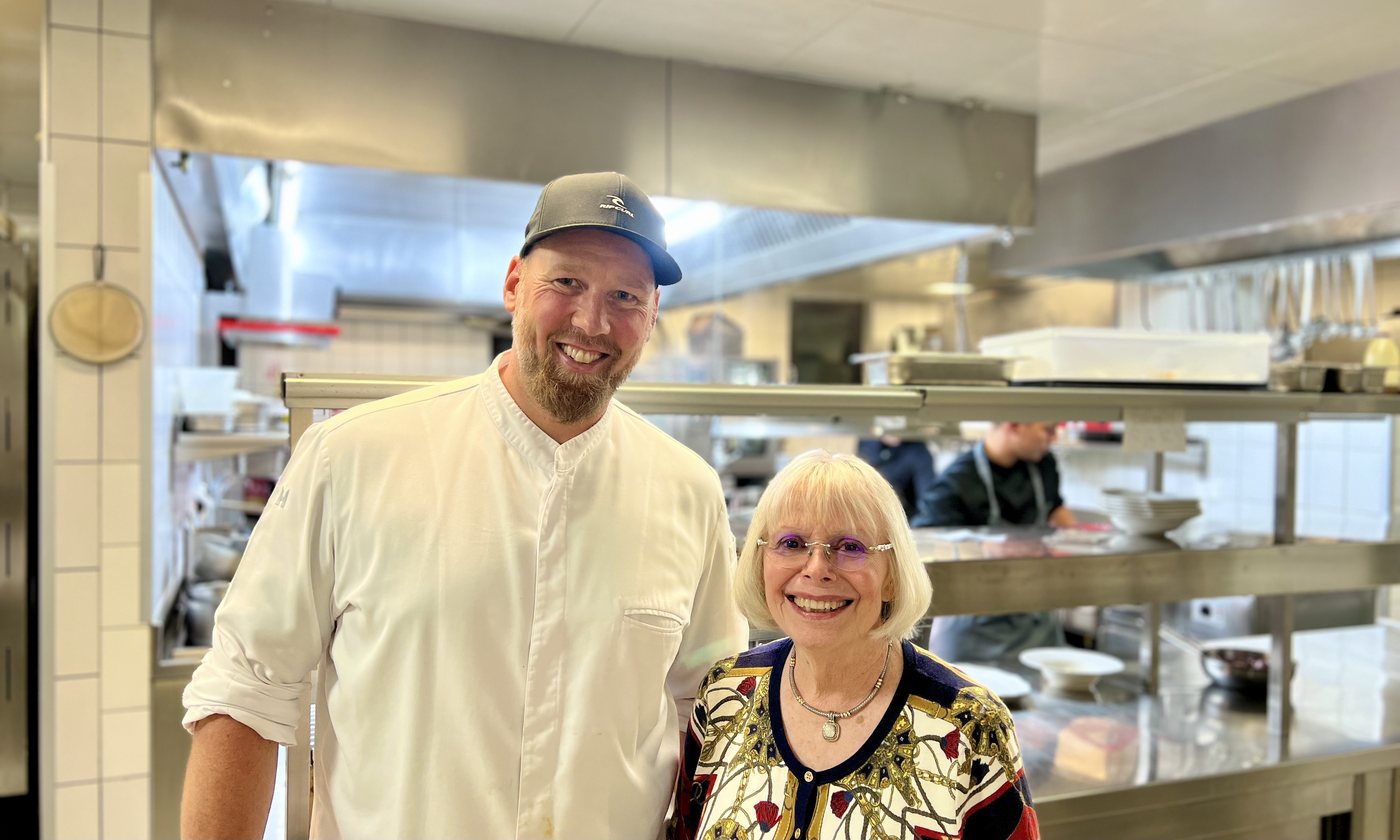
My husband and I have been enjoying Chef Thomas Strasser’s meals for about 10 years. He is the chef at Hotel Post In Lermoos and has been voted one of Austria’s 100 best Chefs.
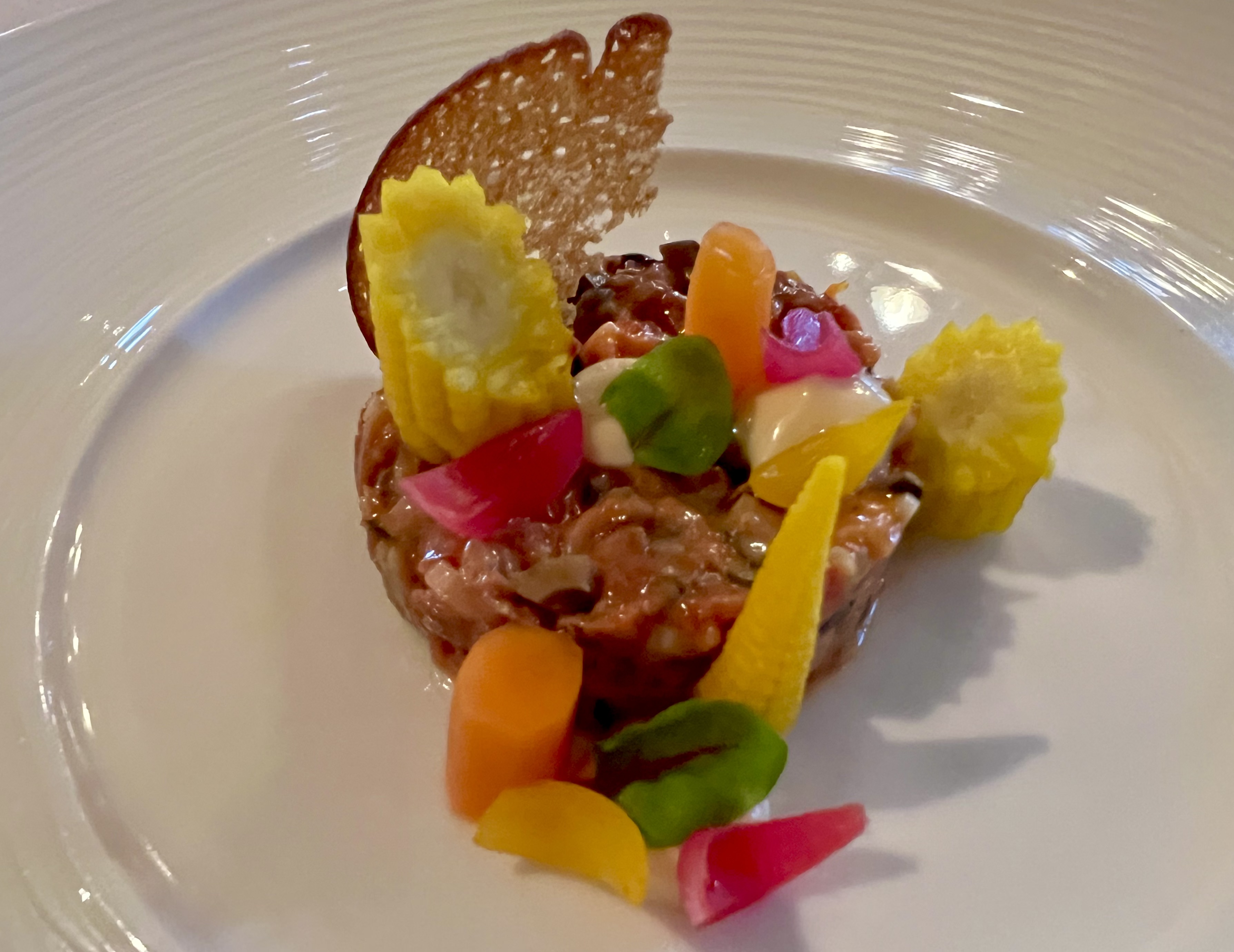
Chef Strasser has outstanding culinary skills using local ingredients. His food is both beautiful and delicious. One of the best appetizers that I have ever had was the chef’s vegetable tartar. It was prepared with pickled vegetables and truffle mayonnaise and topped with a brown bread chip.
Sustainability
There is also a growing movement in Austria towards promoting sustainable practices. In the 2025 edition of the Austria Michelin Guide, 33 Austrian restaurants were awarded a green star.
The Green Star recognizes restaurants that are committed to sustainability. This includes sourcing local and seasonal ingredients. It also involves efficient resource management and reducing waste.
“They are using local and seasonal ingredients and focus on minimizing transportation distances and promoting humane animal husbandry. Additionally, they emphasize reducing waste and saving energy“. Michelin
Chefs across the country are using more wild game meats and local fish from their nearby rivers and lakes. They are also using fermentation and preservation techniques to reduce food waste. Others are experimenting with plant-based options to promote a more sustainable diet.
Chef duo Paul Ivić and Florian Burtscher are from the Michelin star restaurant TIAN in Vienna. It is considered one of the best vegetarian restaurants in Austria and perhaps the world. They use organic ingredients and nearly forgotten varieties of vegetables, fruits, and grains to create refined dishes.
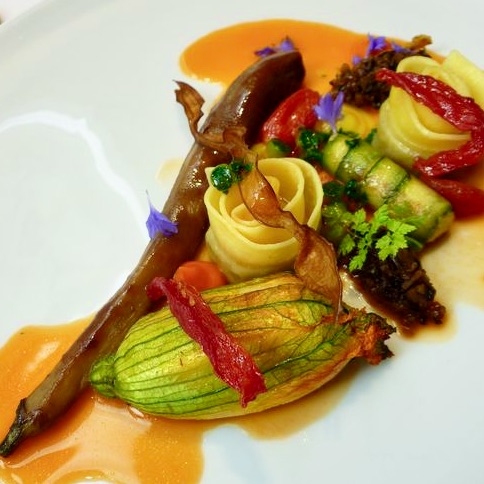
“In our kitchen, biodiversity, local sourcing and quality are just as important as a respect for nature and natural processes“. Paul Ivic
****
Today many of Austria’s top chefs are going back to their roots and updating dishes with long forgotten ingredients. Their main focus is on seasonal and local ingredients. I do hope you will explore all the delicious food that chefs in Austria create. While the classic Wiener Schnitzel is delicious, do try some of the modern dishes Austrian chefs are creating.
Have you traveled to Austria? Do you have favorite Austrian dishes or experiences with the local cuisine? Have you prepared any of the dishes that Austria is famous for in your own kitchen?

Beautiful pictures of beautiful food. This made me think about how cuisine originates. So glad to see more fans of sustainability.
Those highlights look fabulous, I particularly like the idea of the Deconstructed Ratatouille!
I hope you have a trip planned for the fall, so that you can show us some more beautiful dishes, landscapes and hotels.
The food looks delicious and background story was very interesting!
Thank you, Karen, for sharing from your wealth of knowledge about the food and its history in the context of Austria.
Karen, thank you for all of the interesting info! All of the dishes were beautiful and I am sure delicious. The Deconstructed Ratatouille is a gorgeous dish. My husband and I have visited Austria together and I went as a chaperone for our son’s high school in 2003. I loved both trips!
Great read, Karen, and fabulous photos. I went to Austria as a child with my parents and most recently to Vienna with my daughter. It’s a beautiful country and I’ve made Sachertorte, Strudel and used to make goulash a lot. Thank you for a nostalgic read.
No matter where you go, you find the most amazing food! It’s always a pleasure to tag along on your adventures.
Thank you for a wonderfully written post from memory lane reminding us of and clarifying more than one issue in Austria. Have been lucky to have spent time there more than once . . , Salzburg and its surrounds perchance being my family’s personal favourite for scenery, music and food. Hope your husband’s health is continuing to improve . . .
Beautiful food and photos! The last – and only – time I’ve been to Austria, I was much younger, traveling on the cheap via train with a girlfriend. I can assure you that, while we ate plenty, none of our meals looked like that! 😊
we were in Austria many moons ago; we had sachertorte at the takeaway section of the Hotel Sacher:=) Delicious. and so many cafes with delicious cakes in austria.
sherry https://sherryspickings.blogspot.com/
we had a wonderful piece of sachertorte in Vienna many moons ago!
cheers
sherry https://sherryspickings.blogspot.com/
What beautiful food! Tian’s deconstructed ratatouille looks impressive.
After this years trip to Italy and the long flights, we are unlikely to again visit Europe but if we did, it would be hard not to follow you to Austria. Your post is very well written.
We went to central Europe last year and my husband thought it was best food he’s ever had
Great post and beautiful photos! I could eat the snack plate every day. I like innovation in general, but not it it’s too way over the top.
All the dishes look like works of art!
Jenna
There is some seriously beautiful food here, Karen. I was in Austria was when I was young (14) and I remember little about food from that visit. Mark and I were in Salzburg in 2018 and we enjoyed some very traditional dishes (schnitzle, knödeln, hoppel und poppel) but mostly I cooked for us shopping at the outdoor market. I need to eat out more, and branch out in my selections!
TIAN looks absolutely delicious and the presentation is gorgeous. I love that the chef there is committed to sustainability, reducing food waste and using locally sourced ingredients. Beautiful photos, and a wonderful post!
What amazing dishes! I think I need lunch now!
It’s so inspiring to see such a wide range of interpretations for traditional foods! Those are some stunning plates, both high-end and low-brow.
Wow, Austrian food has come a long way since I lived in Vienna back in the 1990s. Back then there was plenty of tradition but not much innvoation that I can recall. Only the schnitzel looks familiar.. ! Time for a return trip, methinks.
I’m savoring Austria’s soul, one delicious bite at a time!
If I’m ever lucky enough to visit that area, I think I could live on just sachertorte and strudel alone! Is that wrong? LOL
This is such a wonderful post describing Austrian cuisine. I absolutely love the coffee culture all over Europe. I am in Northern Europe right now, and people here enjoy their afternoon treat. Gerlinde
Hi Karen. They do indeed make excellent dishes in Austria, and the cuisine in southern Germany is, as you know, quite similar. I love some of their desserts especially and now that apple season is around the corner we will be having strudels as a weekend treat! I do hope you will both be able to travel again next year. All the best to you and your husband!
Wow! Fabulous photos, delicious food, and interesting information. I always enjoy going on an adventure with you. Thank you!
This all looks amazing – but the cake is my favorite! Linda 🙂
Wow, I love how you’ve captured both the classic charm and the modern innovations of Austrian cuisine! I’m especially fascinated by the way chefs like Obauer and Strasser are blending local, seasonal ingredients with contemporary techniques, makes me want to hop on a plane and try everything firsthand. Your post really makes me appreciate how rich and diverse Austrian food culture is, from hearty alpine dishes to delicate pastries. And yes been there in Innsbruck, Salzburg and Vienna as most of them are several hours drive from my Moms place in Zurich! Love that country.
There is nothing better than relaxing with an amazing meal! That is one thing I crave and savor when I have me time is to take time to have a great meal and just relax, take my time, and enjoy it. Loving your post and now I am hungry 🙂
What a wonderful post on the joys of traveling to Austria, Karen! I enjoyed reading about your culinary adventures and experiences. It brought back lovely memories when my husband and I stayed in Salzburg . . . nearly 10 years ago, I can’t get over how time flies. We stayed at the Hotel Sacher before Christmas and it was simply magical. We received complimentary slices of Sachertorte with champagne in our gorgeous hotel room. While walking around and touring the area, we sampled apple strudel wherever it was on the menu. Could never get enough! Schnitzel is one of our favorites too, despite it being an ancient dish. We can’t get into deconstructed food and gravitate to traditional classics of any region that we visit. I hope you can visit again so I can virtually experience this amazing country again!
Nicely blended! Lovely presentation. 🙂